
By | Medically Reviewed by Christopher W. Boelter, M.D.
|
Erectile dysfunction (ED) means having ongoing difficulty getting or keeping an erection firm enough for sex. It’s common, and it can have multiple causes vascular, hormonal, neurological, medication-related, or stress-related so “the best pill” is usually the one that fits your health profile and lifestyle.
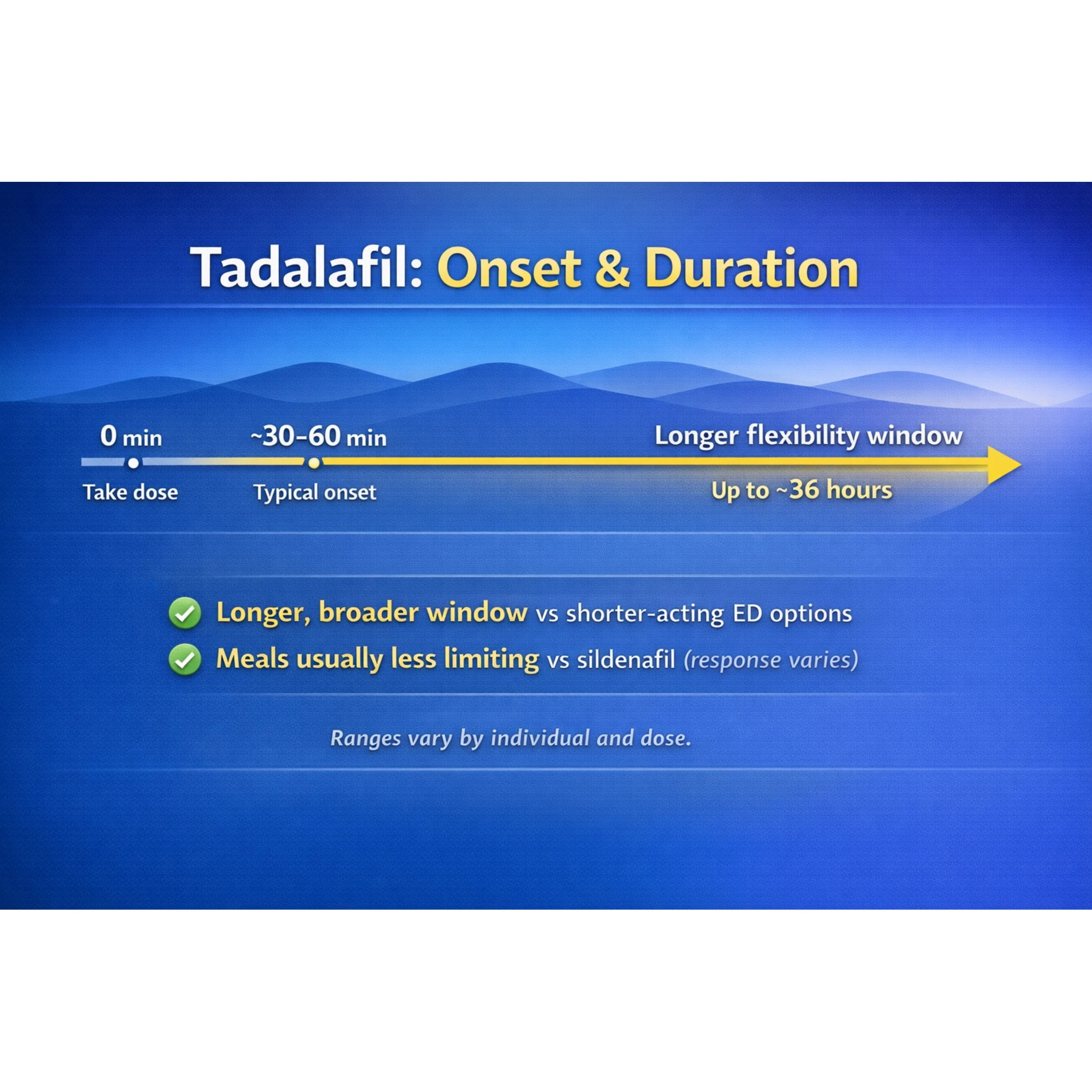
Tadalafil is a widely used ED medication because it typically offers a longer flexibility window than shorter-acting options. Many men prefer it when they want less pressure around precise timing and more freedom around meals and schedules.
This guide explains how tadalafil works, what to expect from Vidalista (tadalafil), and how daily tadalafil differs from on-demand use, with a strong focus on safety and practical decision-making. You can review the product overview here: Vidalista (tadalafil).
Medical note: This is educational content, not medical advice. ED can be an early sign of cardiovascular risk. If you have chest pain, fainting, uncontrolled blood pressure, or you take heart-related medications, talk to a clinician before using ED medication.
This article is written from the clinical perspective of John K. Matsuura MD, – Urologist in Advanced Precision Urology Medical Network (APUMN).
How tadalafil works and why it lasts longer
Tadalafil belongs to a class of medications called PDE5 inhibitors. In plain terms, it supports the blood-flow response involved in erections, but it still requires sexual stimulation it doesn’t increase desire on its own.
What makes tadalafil stand out is its longer activity in the body, which is why people often describe it as offering “flexibility” rather than a short, tightly timed window. That flexibility is the main reason tadalafil is frequently compared to sildenafil-based options.
On-demand vs daily tadalafil: the real difference
Tadalafil is commonly used in two patterns. The choice isn’t about “stronger vs weaker” it’s about which routine fits your life and minimizes side effects.
- On-demand tadalafil is taken ahead of sexual activity. It’s often preferred if sex is occasional and you don’t want a daily routine.
- Daily tadalafil is taken consistently at a lower dose as a routine plan. It may be considered when intimacy is more frequent, or when a steady approach feels simpler than planning around doses.
A useful way to think about it: on-demand is event-based, while daily is routine-based. The best fit depends on frequency, tolerance, and what your clinician recommends based on your health and other medications.
If your clinician has recommended the daily approach, see what to expect with tadalafil 5 mg once daily, including timing, steady-state levels, missed doses, and safety considerations.
What to expect from tadalafil (real-world outcomes)
Many men who do well with tadalafil describe these benefits:
- less pressure around timing (“a wider window” rather than a countdown),
- fewer worries about meals affecting the experience (though individual response varies),
- a more natural feel when intimacy isn’t strictly scheduled.
At the same time, tadalafil isn’t automatically the best option for everyone. Some men prefer shorter-acting options, and some simply tolerate a different PDE5 inhibitor better.
Vidalista overview: who it’s for and what to expect
Vidalista is a tadalafil-based option people typically consider when they already want the tadalafil “profile”: a longer flexibility window and less pressure to time a dose down to the minute. It’s not a shortcut to stronger erections tadalafil still requires stimulation but it often fits better when intimacy is less predictable.
In real-world use, tadalafil is usually a good match when at least one of these patterns is true:
- You want a wider window so sex doesn’t feel scheduled.
- You expect intimacy more than occasionally and don’t want to plan every time.
- You tried shorter-acting options and disliked the “countdown” feeling.
It also helps to set expectations correctly. Tadalafil doesn’t fix every cause of erectile dysfunction, and it won’t override heavy drinking, poor sleep, high stress, relationship tension, or untreated medical issues. Many men get the best results when tadalafil is one part of a broader plan that includes cardiovascular risk management, sleep, weight, and a medication review.
Daily tadalafil vs on-demand: how to choose
The most practical way to choose is to match the regimen to frequency and lifestyle, then confirm safety especially if you take blood-pressure medications or prostate medications.
| Decision factor | On-demand tadalafil | Daily tadalafil |
|---|---|---|
| Best fit when | Sex is occasional, or you prefer not to take a daily pill | Sex is frequent, or you want a steady routine |
| Planning pressure | Medium (you still plan ahead) | Low (less event-based timing) |
| Dose pattern | Higher dose less often | Lower dose consistently |
| Side effects pattern | May feel more noticeable on dose days | Often steadier; some men find it easier to tolerate |
| “Spontaneity” feel | Good, but still somewhat planned | Often best for flexibility |
A simple decision rule many clinicians use: if intimacy is infrequent, on-demand is often sufficient; if it’s frequent or timing pressure is a major issue, daily may be worth discussing.
Side effects and key interactions
Tadalafil side effects are usually dose-related. Many men experience none or only mild effects, but it’s important to know what’s normal and what’s not.
Common side effects may include headache, flushing, indigestion, nasal congestion, and back or muscle aches. Back/muscle aches are reported more often with tadalafil than some shorter-acting options, and they can show up hours later rather than immediately.
Stop and get urgent care for chest pain, severe dizziness/fainting, sudden vision or hearing changes, or an erection lasting longer than four hours.
The interaction that matters most
The most important safety rule is the same across PDE5 inhibitors: do not combine tadalafil with nitrates (commonly used for chest pain/angina). This combination can cause a dangerous drop in blood pressure.
Blood pressure meds and prostate meds
If you take medications for blood pressure, or medicines used for urinary symptoms/prostate issues, tadalafil can sometimes add to blood-pressure lowering effects. That doesn’t automatically mean “you can’t use it,” but it does mean dose choice and timing should be conservative and guided by a clinician especially when starting or changing therapy.
Tadalafil vs sildenafil: practical differences (quick snapshot)
Some men are deciding between tadalafil and sildenafil rather than between brands. The real-world difference is less about “stronger” and more about timing style.
- Tadalafil is usually chosen for a longer flexibility window.
- Sildenafil is often chosen when someone prefers a shorter, more timed window and wants the effect to be more “event-based.”
If you want a broader class comparison (not just these two), here’s a full overview: Comparing ED medications: Viagra, Cialis, Levitra, and Stendra.
Prescription rules and buying online safely in the US
In the US, ED medications are generally prescription-based because safety depends on your heart/blood pressure profile and drug interactions. Any online seller that pushes “no prescription needed” for prescription-only ED meds is a major red flag.
Clinician perspective: when to see a urologist
If ED is persistent, worsening, or paired with symptoms like shortness of breath on exertion, chest discomfort, new urinary symptoms, or significant anxiety about sexual performance, it’s worth getting a structured evaluation. A urologist approach also helps when first-line pills aren’t working reliably, because the cause may not be dose/timing at all.
For a clinical framework (workup + management pathway), see: Modern clinical management of erectile dysfunction: a urologist’s perspective.
If tadalafil isn’t right: what to do next (practical pathway)
If tadalafil isn’t giving you consistent results, the best move is to troubleshoot in a structured way instead of guessing. Most “tadalafil didn’t work” cases fall into one of four buckets: timing/expectations, dose tolerance, interaction/health factors, or the wrong tool for the underlying cause.
Step 1: Confirm you’re testing it correctly (before changing anything).
To judge tadalafil fairly, you need sexual stimulation, enough time for onset, and a realistic expectation: it supports erectile response it doesn’t create it automatically. If stress, fatigue, or heavy alcohol use is dominating the moment, the medication may feel “ineffective” even when it’s active.
Step 2: Decide whether the problem is “too weak” or “too many side effects.”
- If it feels too weak, the issue is often timing, insufficient stimulation, or a dose plan that doesn’t match your body.
- If it causes headache, flushing, or back/muscle aches that ruin the experience, pushing dose upward usually backfires. The better strategy is adjusting the regimen (often discussing daily vs on-demand) or switching agents.
Step 3: Screen for interaction and health blockers (the high-impact checks).
If you’re on blood-pressure meds or prostate meds, lightheadedness can be a sign that tadalafil is amplifying blood-pressure lowering effects. Also, persistent ED can reflect cardiovascular risk factors. When that’s the case, optimizing sleep, blood pressure, glucose, weight, and smoking status can meaningfully improve medication response.
Step 4: If PDE5 inhibitors aren’t a fit, move to evidence-based alternatives (not “random supplements”).
Clinically used next-line options often include:
- vacuum erection devices (mechanical support)
- intracavernosal injections (high efficacy for selected patients)
- intraurethral therapy (in certain cases)
- addressing hormones when clinically indicated (only after proper testing)
- psychotherapy/sex therapy when anxiety/relationship factors are central
Step 5: Use a clear “switch vs escalate vs refer” rule.
- Switch if side effects are the limiting factor.
- Adjust regimen (daily vs on-demand) if planning pressure is the limiting factor.
- Refer/evaluate if ED is persistent, worsening, or paired with chest symptoms, fainting, or major urinary changes.
FAQ
How long does tadalafil last compared to sildenafil?
Tadalafil typically provides a much longer flexibility window, while sildenafil is usually used for a shorter, more timed window. Exact duration varies by individual response and dose.
Is daily tadalafil safe for long-term use?
For many patients, daily tadalafil can be used long-term when it’s medically appropriate and monitored. Safety depends on your cardiovascular status, blood pressure, and medication interactions, so clinicians treat it as a decision that should be individualized.
What’s the best time to take tadalafil for planned sex?
Many men plan tadalafil far enough ahead to allow onset, then rely on the broader window rather than a precise minute-by-minute schedule. For daily use, the key is consistency taking it around the same time each day.
Can tadalafil be taken with blood pressure medications?
Sometimes yes, but it depends on the specific medication and your baseline blood pressure. Because tadalafil can lower blood pressure, clinicians may recommend a conservative starting approach and monitoring for dizziness or lightheadedness especially when combined with certain prostate or blood pressure medicines.
What are the biggest safety “no-go” combinations with tadalafil?
The most important is nitrates used for chest pain/angina, due to the risk of a dangerous blood pressure drop. If you’re not sure whether you take nitrates, don’t guess verify with your clinician or pharmacist.